
Pre-journey check.
Journey ready.
AiR is a new category of forecourt infrastructure: four hoses, four tyres, manufacturer-approved pressures for the exact load you are carrying, and a national safety dataset built from every session.

AiR in ninety seconds
Introductory explainer. Presenter render pending, the spoken script is written and ready to drop in.
The AiR story
From the grid to the school gate
In professional motorsport, tyre pressure is a safety system. It is measured to a hundredth of a bar, set per corner, and re-checked before every single run. Nobody in the paddock calls that excessive. They call it the minimum.
Now picture the same physics at 8:20 on a wet Tuesday morning: a family car, two children in the back, bags in the boot, four tyres nobody has touched since spring. The stakes went up. The precision went away.
AiR exists to close that gap. Not with a lecture, and not with a gauge on a chain. With a machine that connects to all four wheels, corrects each one to the pressure that vehicle and that load actually require, and hands back a record, in about ninety seconds, on the forecourt people already visit.
The problem
Tyres are the only part of a car touching the road, and the least maintained.
These are published, real-world figures, not simulation. Tyres are getting heavier duty, more expensive and shorter-lived, while forecourt air machines still handle one tyre at a time with no vehicle knowledge, no load awareness and no record.
~50m
New tyres supplied in the UK each year
For cars, vans, trucks and buses, on new vehicles and as replacements. 48% arrive from Europe, 40% from China.
Source: British Tyre Manufacturers' Association£2.3bn → £3.9bn
UK car-tyre market value, 2022 to 2030 (forecast)
40 million car tyres were sold in the UK in 2022; the market is forecast to reach around £3.9bn by 2030.
Source: Autocar / Enso, June 202520% faster
Tyre wear on EVs versus combustion vehicles
Michelin's stated figure. Battery weight, high torque and urban duty cycles all accelerate wear, and tyre load utilisation has moved from roughly 50% to 70-80%.
Source: Michelin, reported by Autocar57%
UK cars running 10%+ below recommended pressure
Under-inflation wastes at least £112 million of tyre life a year, and 37% of drivers say they are not confident inflating their own tyres.
Source: The Motor Ombudsman, June 2024201
People killed or seriously injured in GB from illegal, defective or under-inflated tyres (2025)
Up 19% year on year from 169 in 2024, with 667 casualties of all severities. Motorcyclist tyre-related KSIs hit a decade high of 39.
Source: DfT Reported Road Casualties GB, via TyreSafe~2m
MOT tyre failures every year in the UK
TyreSafe is calling for DVSA's annual MOT tyre failure count to be adopted as a national road-safety performance indicator.
Source: DVSA, via TyreSafe224m
Replacement consumer tyres sold across Europe in 2025
Car, SUV and light-commercial replacement volumes reported by Tyres Europe members, whose global sales represent about 70% of the worldwide tyre market.
Source: Tyres Europe, Q4 2025 update+27m
Extra stopping distance at 70mph in the wet on worn tyres
A 28% increase over the Highway Code baseline, 123m versus 96m, measured on worn versus new tread.
Source: Halfords / Cardiff University CAIR, 2023Figures above are published third-party data, current as of the sources linked. All AiR session, network and fleet data elsewhere on this site is simulated.
The national prize
Britain wastes £1.00bn of fuel a year on tyres that are simply not at the right pressure.
That figure is TyreSafe's, not ours. It is the addressable ceiling, and it sits alongside a road network carrying 342.6 billion vehicle miles a year with no measurement layer anywhere in it. The scale of this project is the scale of that gap.
£1bn
UK fuel wasted every year through underinflation
The addressable household and fleet cash waste the intervention targets
342.6bn
GB motor vehicle miles driven in 2025
The recurring intervention surface AiR sits inside
42.3m
Licensed vehicles in the UK at end of 2025
The national addressable fleet
53,000+
Tyre-related motorway and major A road breakdowns in 2024
Close to one in five incidents on the strategic network
Fuel cost avoidable each year
£500m
If half of that existing waste is removed
Fuel demand removed
360m litres
Same journeys, fewer litres imported
Emissions avoided each year
835,434 tCO2e
No new vehicles, no new fuel, no behaviour lecture
50 year combined value
£36.40bn
Fuel cash plus social carbon value, undiscounted

The scale of the gap
Most cars on the UK network are running below their approved cold pressure right now.
The cost nobody itemises
Under-inflated tyres wear out early. You pay for it twice, every year, for as long as you own the car.
Ten percent below the approved cold pressure is not an edge case, it is the majority of cars on the road. It does not trigger a warning light, it does not fail an MOT on the day, and it quietly shortens tread life while raising the energy cost of every mile. Set your own numbers below and look at what that is worth over one, five and ten years.
Adjust the inputs. The arithmetic uses published tread-wear and rolling-resistance relationships, not AiR simulation.2008,2001,2006
1 year
£35
avoidable, at today's prices
Tyres burned early£18
Fuel wasted£17
Litres lost12
5 years
£176
avoidable, at today's prices
Tyres burned early£90
Fuel wasted£86
Litres lost61
10 years
£353
avoidable, at today's prices
Tyres burned early£180
Fuel wasted£173
Litres lost122
13%
Tread life lost
A set that should reach 25,000 miles is scrapped at 21,875.
+1.5%
Energy penalty
Rolling resistance rises as pressure falls, on every single revolution.
0.43
Extra sets per decade
Additional full sets of four bought purely because of pressure error.
Scaled across the cars actually driving on this
57% of UK cars run 10% or more below their recommended pressure2024. Apply this scenario to that share of roughly 33 million licensed cars and the avoidable national cost is around £0.7bn a year in tyres and energy alone - before a single casualty, wheel, pothole claim or particulate is counted.
Nobody is checking four tyres for them
Conservative model. Excludes early casing failure, punctures and blowouts, wheel and suspension damage, insurance excess, MOT failure and rework, and every safety benefit. Coefficients and sources documented on the science page.
Where the damage happens
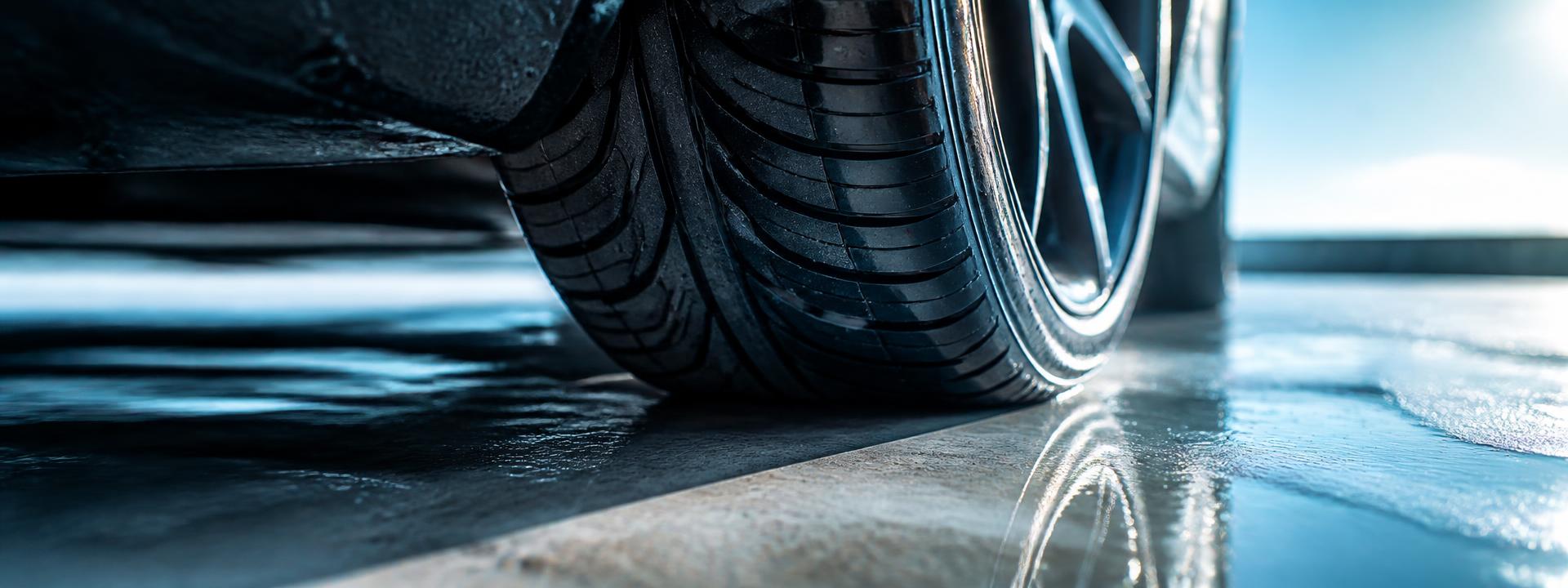
A few PSI changes the shape of the contact patch, and the shoulders pay for it.
Premature wear
How a few PSI destroys a tyre months before its time.
Premature wear is not wear that happens faster everywhere. It is wear concentrated where the tyre was never designed to carry load, driven by a contact patch that has changed shape.
Wear turns irregular
Shoulder wear runs ahead of centre wear, so the tyre reaches the legal limit in one band while the rest of the tread is still serviceable. The set is scrapped early with usable rubber still on it.1992
Stage 3 of 4
Load spread across the full tread width. Even wear, designed stopping distance, rated rolling resistance.
Shoulders overloaded, centre lifting, tread life falling, fuel and charge consumption rising. No warning given.
Casing working far outside its design envelope. Materially higher tyre-related crash involvement, and blowout risk at motorway speed.2012
Roads, potholes and everyone else
Correct pressure protects the road as well as the driver on it.
A properly inflated tyre is the vehicle's first spring. It absorbs the edge of a pothole and spreads the impulse over time; an under-inflated one bottoms out and delivers a hammer blow into the wheel, the suspension and the road surface itself. On a network with a large maintenance backlog, that difference compounds in both directions.
Pinch shock and rim damage
Soft tyres are far more likely to suffer a pinch impact against a pothole lip: sidewall bulges, casing damage, buckled alloys and immediate blowout risk at speed.2006
- TPMS was only ever designed as a puncture alarm. European type approval expects a warning at around 20% below specification, four times the error that is already costing money.2016
- Tyres lose pressure continuously through permeation, so a check every few months cannot hold a specification. Regulators have known manual checking fails since before TPMS was mandated.2009,2005
- Forecourt air still means one hose, one guess, one tyre at a time, with no knowledge of the vehicle, no knowledge of the load on board and no record of what was done.
- Nobody owns the outcome. Tyre labels are measured at reference pressure, wet grip is rated at reference pressure, and then the vehicle leaves the forecourt somewhere else entirely.2016,2020,2018
Key sources for this section
- Transportation Research Board, National Research Council (2006). Tires and Passenger Vehicle Fuel Economy (Special Report 286). National Academies Press.
- Grosch, K. A. (2008). Rubber Abrasion and Tire Wear. Rubber Chemistry and Technology, 81(3), 470-505.
- De Beer, M., Fisher, C. and Jooste, F. J. (1997). Determination of Pneumatic Tyre/Pavement Interface Contact Stresses under Moving Loads. 8th International Conference on Asphalt Pavements (ISAP), Seattle.
- Horne, W. B. and Dreher, R. C. (1963). Phenomena of Pneumatic Tire Hydroplaning. NASA Technical Note D-2056.
- Highway Research Board (1962). The AASHO Road Test, Report 5: Pavement Research (Special Report 61E). National Academy of Sciences.
- The Motor Ombudsman (2024). Driving under pressure is costing the nation's motorists at least GBP 112 million every year in lost tyres. The Motor Ombudsman research study.
The machine
Designed like automotive hardware, not vending equipment.
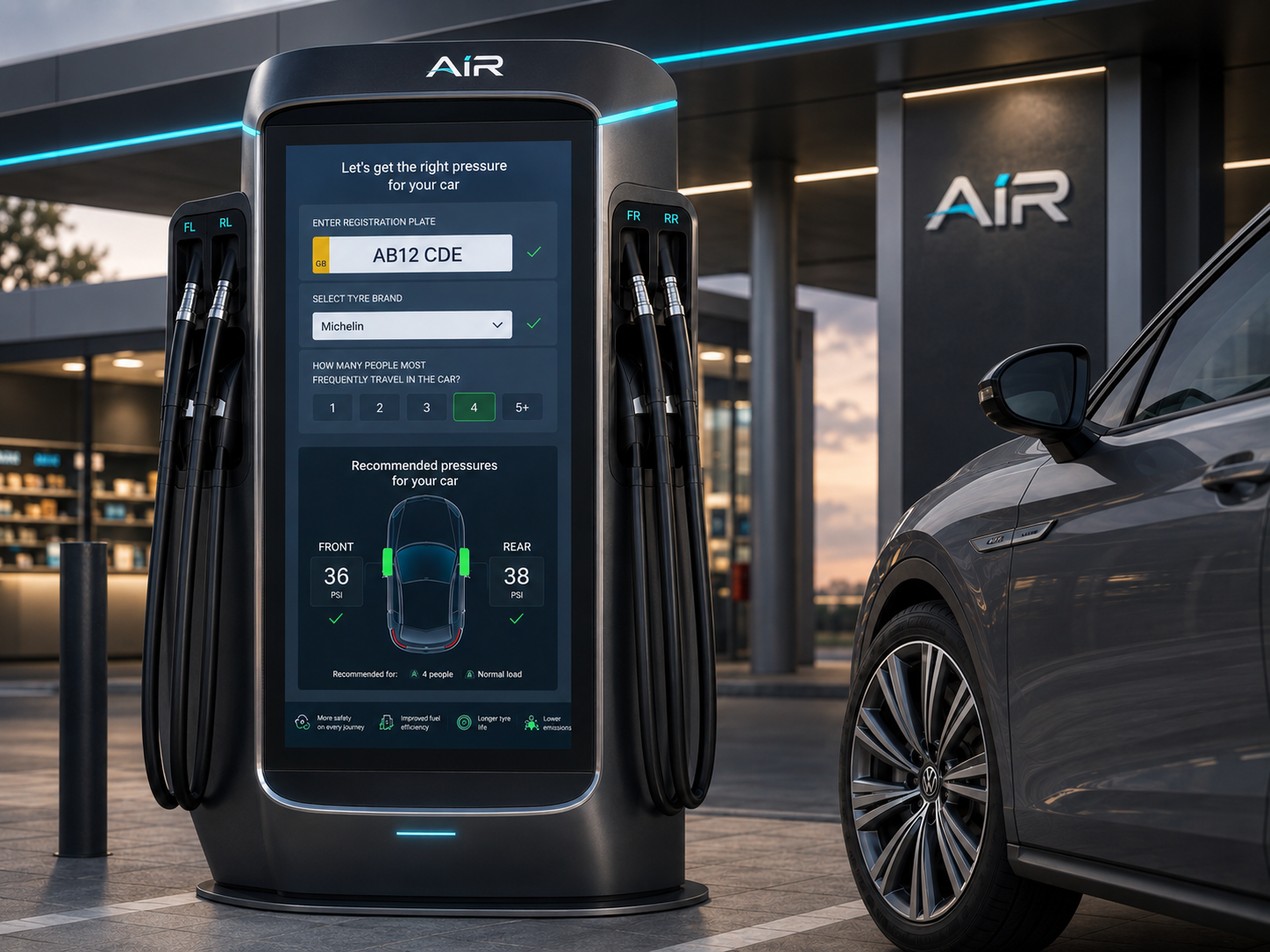
A curved graphite enclosure, a large portrait display, four retractable hoses with two docks per side, and an internal manifold that measures and corrects each tyre independently.
Four hoses. One check.
All four tyres measured and corrected in a single guided session, not one hose, one guess, one tyre at a time.
Manufacturer-approved only
AiR selects an approved pressure profile for the vehicle and the load. It never invents or overrides a specification.
Load-aware intelligence
Occupancy, luggage, roof boxes, trailers, pillion riders and journey type all change the correct pressure. AiR asks, then applies.
A national dataset
Every session builds an anonymous, aggregated picture of tyre condition across the road network.
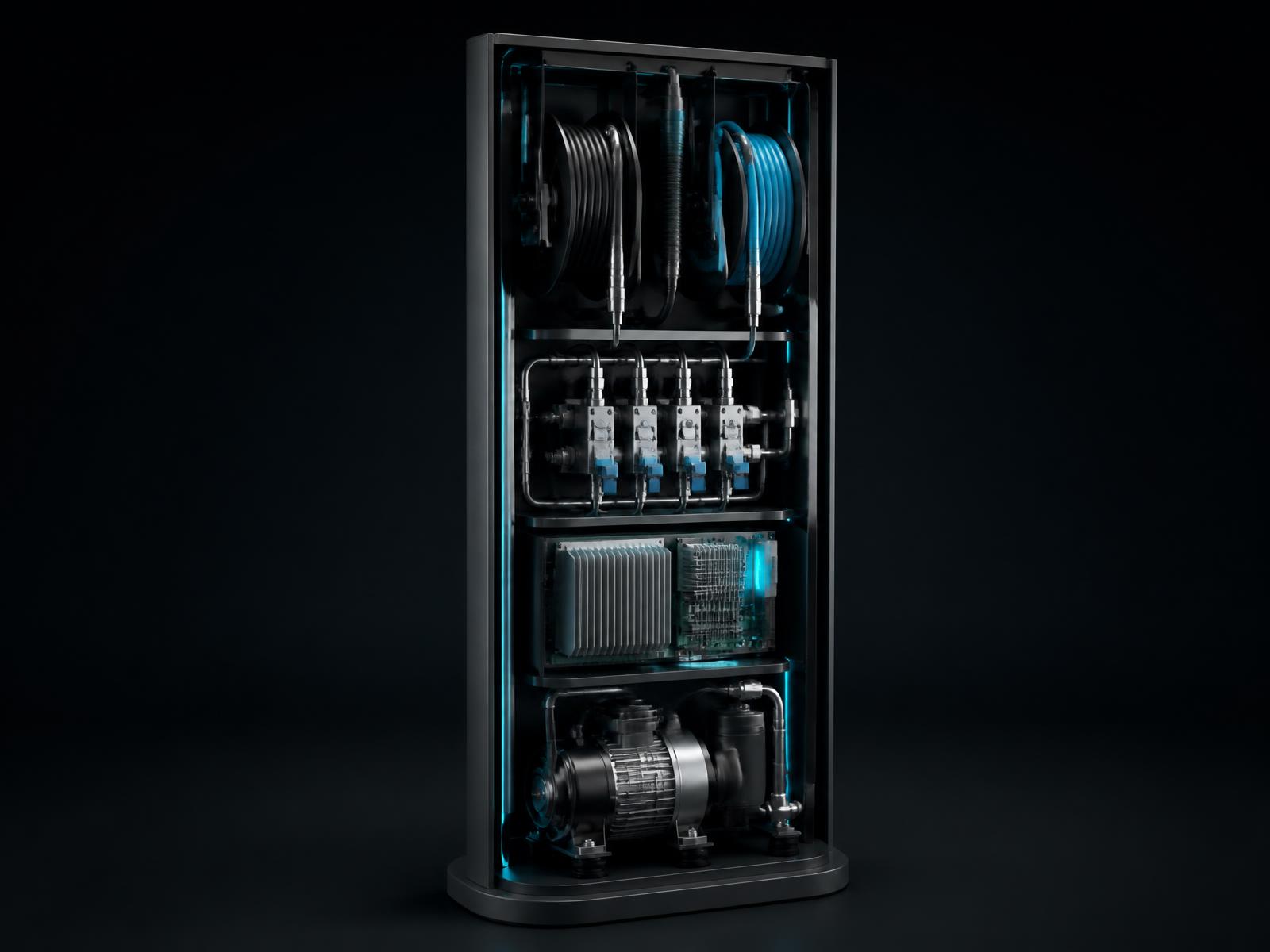

One engine, every surface
A session on the machine writes straight through to the app, the fleet portal and the national dataset.
The platform
Fourteen connected surfaces, one simulation engine.
Every screen in this demonstration reads from the same deterministic engine, so a session started on the machine appears in the app, the fleet portal and the national dataset.

Journey ready
The end of the session is the start of the journey.
Four tyres measured, corrected and recorded against an approved specification for the exact load on board. The driver leaves with a result, not a guess, and the vehicle carries a verified pre-journey record.
One result, four tyres
Front and rear targets applied independently, each channel verified after correction.
A record that travels
Every session is written to the vehicle history in the AiR app and, for fleets, to the compliance ledger.
A node, not a pump
On-board inference decides, verifies and reports, then contributes to the wider mesh.


Deployment
Forecourt, dealership, depot and home wall unit, one platform, four form factors.
Deployment
Power in, intelligence on board, no plant room required.
Silent scroll compressors, the pneumatic manifold, the control stack and the AI inference module all live inside the enclosure. A site needs a plinth and a single power feed, every unit then joins the decentralised mesh as its own node.
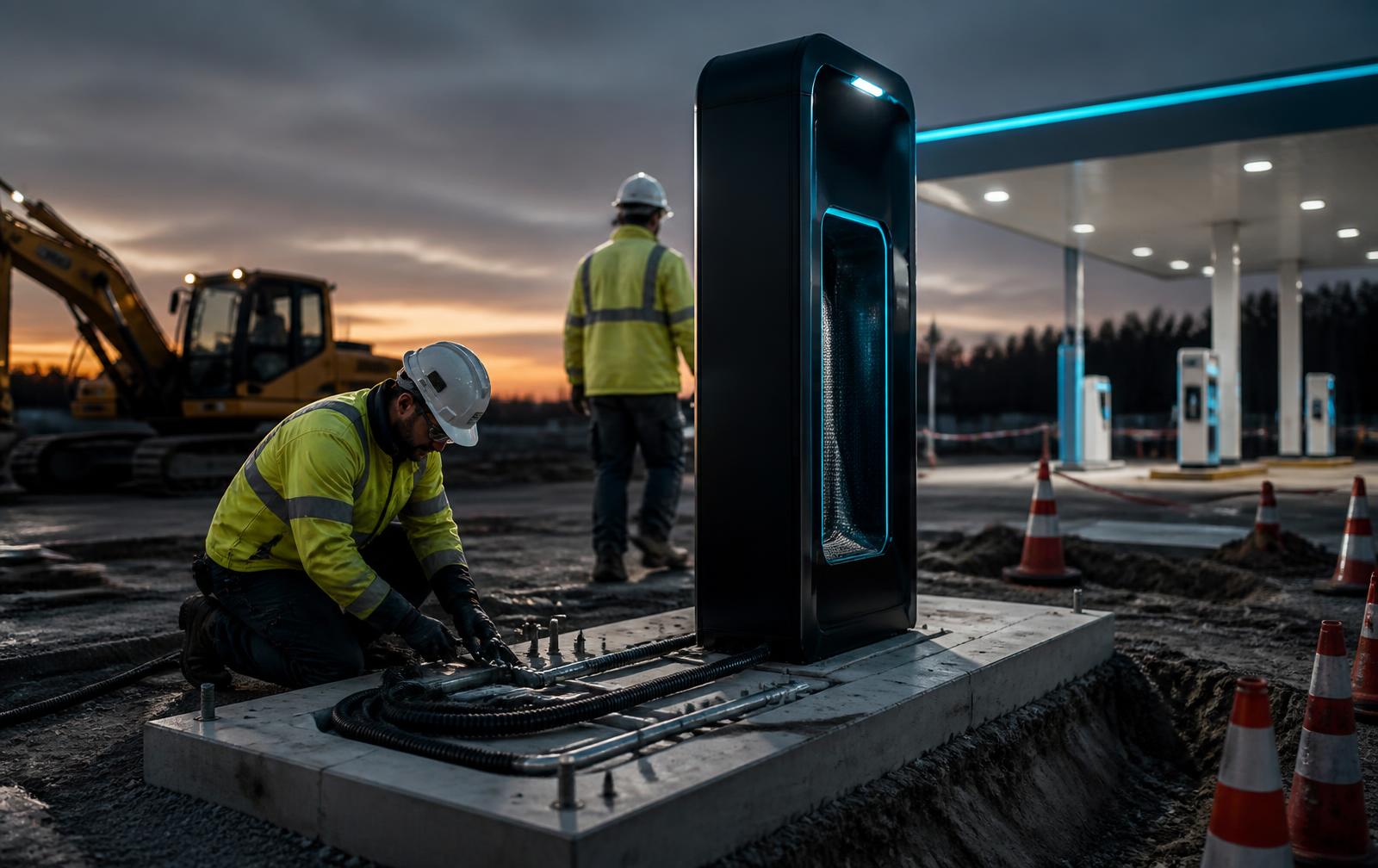
One 230V 32A feed, a 1.4 x 0.9m plinth, no compressed-air ring main, no data cabling. Commissioning is a half-day, two-person task.
Recovery partners
Prevention in the boot of every covered car.
Co-branded AiR smart pumps and a guided app lap of the car for roadside recovery members. Journey-specific targets rather than one number for every trip, 0.1 PSI resolution, and every check written to a tyre health log.
Every tyre, correctly inflated, on every journey.
Start with the machine. It is the point where safety, data and infrastructure meet.
Launch machine simulator